
Breaking Barriers as North Carolina’s First Deaf Female Truck Driver
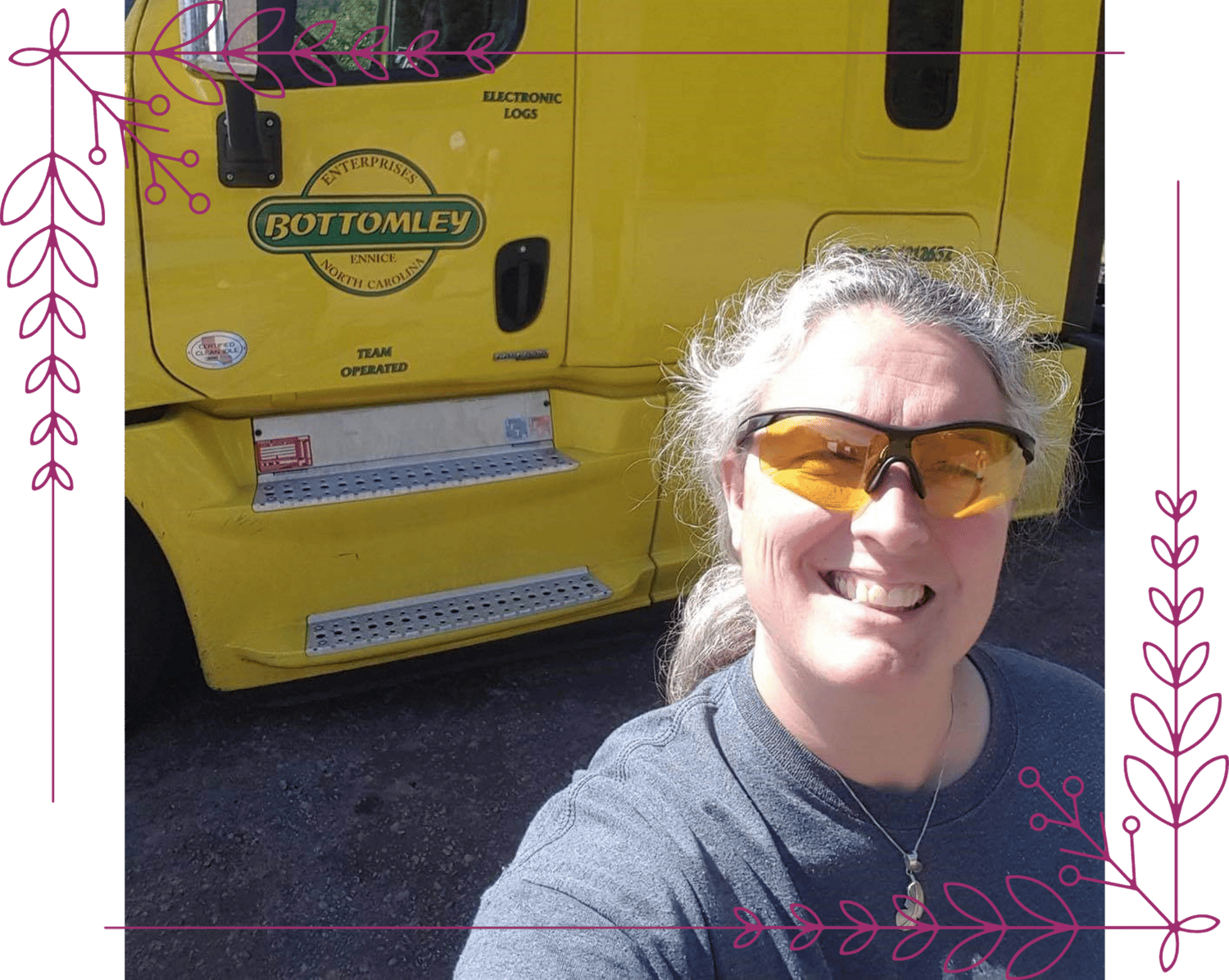
Christa Butner, a driver for Bottomley Enterprises, has made history as the first deaf woman in the state of North Carolina to become certified to drive a tractor-trailer. Hailing from Yadkinville, Butner’s love of travel and fascination with new places motivated her to pursue a career in trucking, a profession that allows her to explore different towns, cities, and cultures across the country. Coming from a family of supportive truckers, she found encouragement in her loved ones even as some doubted whether her deafness could be compatible with professional driving. But her accomplishments speak for themselves.
“My family is proud of me for being the first deaf woman driver in North Carolina,” Butner said. “They’ve been very encouraging and supportive.”
Butner’s journey began with obtaining a medical waiver from the Federal Motor Carrier Safety Administration (FMCSA), followed by completing intensive truck driver training at Surry Community College. Her program involved nine weeks of rigorous study, including eight-and-a-half-hour days of both classroom learning and hands-on driving practice. With the assistance of an interpreter, Butner mastered the coursework and behind-the-wheel training, demonstrating exceptional skill and determination.
After completing her training, she was recruited by Bottomley Enterprises, along with her driving partner Marc Cathey, and quickly began her professional trucking career. Bottomley was among at least two companies to offer her employment, recognizing her talent, dedication, and potential to succeed.
Despite the challenges that come with being deaf, Butner excels on the road. She drives primarily by sight and uses her sense of touch to detect vibrations in her rig, allowing her to monitor her vehicle as effectively as any other driver would with sound. Communication on the road is managed through notepads, her driving partner, satellite communication devices, text, and email. At weigh stations, she utilizes the CAT Scale app and nonverbal signals to coordinate processes efficiently.
“It’s a challenge to communicate, and I want to prove that I don’t need to hear to drive a rig,” Butner said. “I use my vision and other senses. No one’s going to stop me.”
In her first three months with Bottomley Enterprises, Butner completed twelve runs to the West Coast, hauling clothes and produce in her 18-wheeler rig. Her employers describe her as responsible, dependable, and professional. “She is a topnotch professional, and it gives us great pride to have her on our team,” the company said in a press release, highlighting her accomplishments as part of Deaf Awareness Month. Bottomley Safety Director Stan White added, “She’s made a real good driver.”
Christa’s achievements extend beyond her driving career. She earned a bachelor’s degree and has long believed in the power of language to empower individuals and break down barriers to employment. In 2017, she was recognized as the Support Service Provider (SSP) of the Year at the North Carolina Deaf-Blind Associates (NCDBA) conference for her outstanding service to the community.
In 2018, she became the first female in North Carolina to receive a Commercial Driver’s License (CDL), cementing her status as a trailblazer in the trucking industry. Recognizing the importance of community and mentorship, Christa founded the Facebook group Deaf Female Truckers, where she advocates for deaf truckers and provides guidance to aspiring drivers. She also volunteers her time to support deaf, hard-of-hearing, and deaf-blind communities, sharing her knowledge of communication methods and helping others access resources in ways that meet their individual needs.
Christa Butner’s story is one of perseverance, innovation, and dedication. By combining her love of trucking with advocacy for accessibility, she demonstrates that deafness does not limit potential or opportunity. Her accomplishments continue to inspire a new generation of truckers, proving that with determination, skill, and support, barriers can be broken, and dreams can be realized.